
What is the Sorama Fault / No Fault?
By combining acoustic imaging, fault detection, and source localization, Fault / No Fault helps organizations increase asset coverage, prioritize maintenance activities, and reduce the risk of developing bearing faults going unnoticed.
Immediate bearing assessment
Assess bearing condition from a single measurement. No baseline data, trend history, or previous inspections required.
Fault / No Fault Classification
Acoustic Source Localization
Visualize where fault-related sound originates to verify whether the detected indication is associated with the bearing of interest.
Automated Reporting
Generate standardized inspection reports that support maintenance planning, documentation, and follow-up actions.
How does the Sorama Fault / No Fault work?
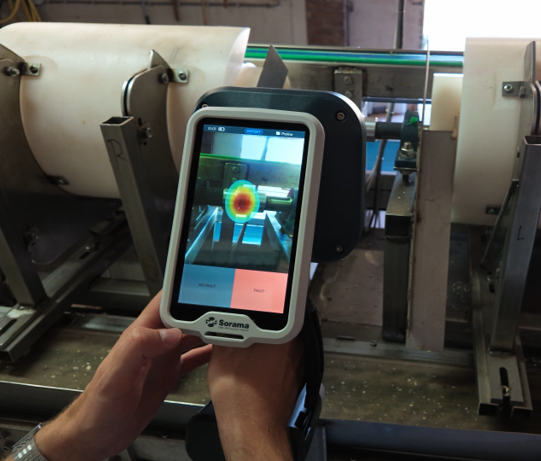
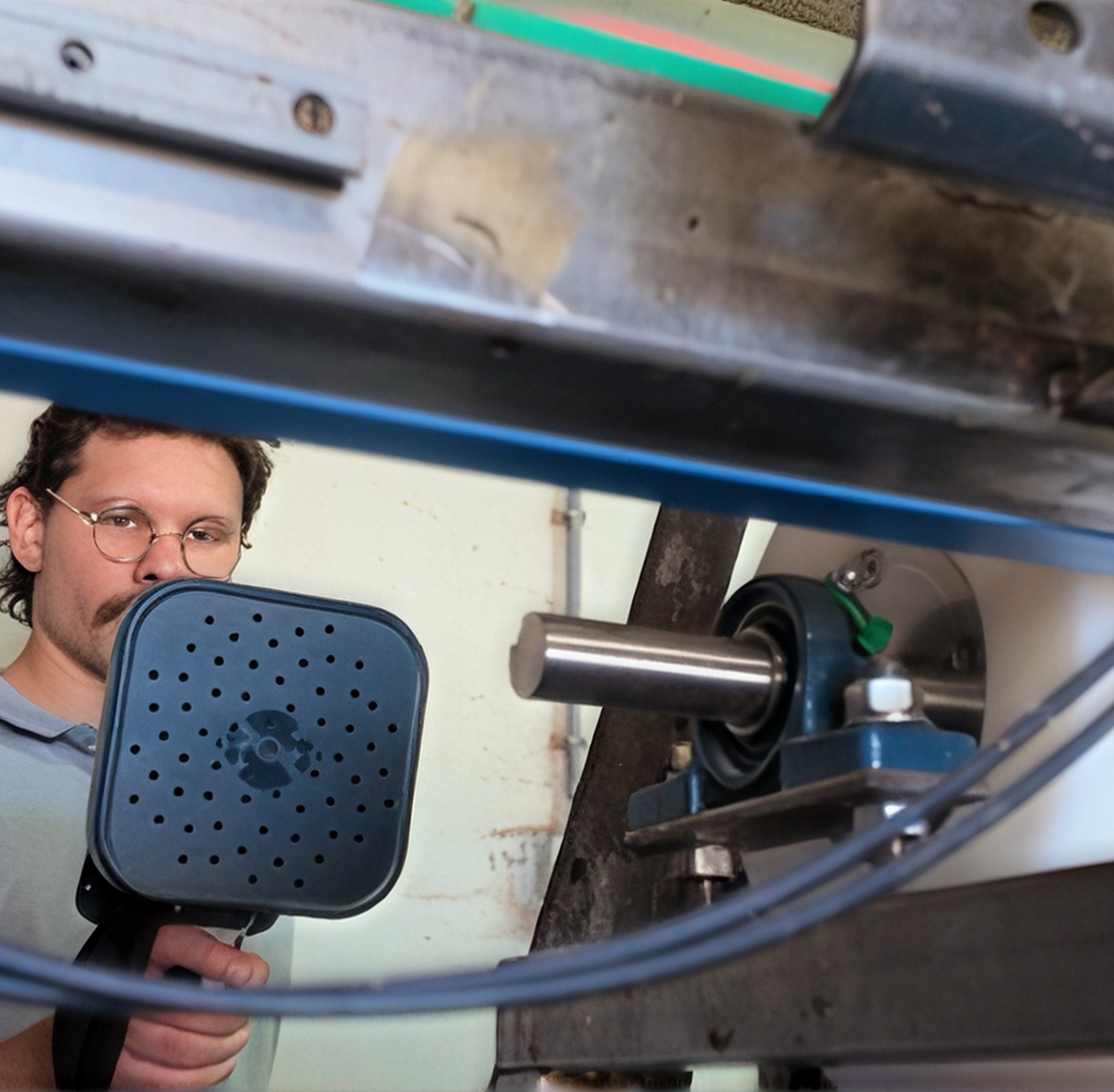
Mechanical Inspection Fault / No Fault uses acoustic imaging to evaluate bearing condition during normal operation. An operator performs a measurement using a Sorama acoustic camera, capturing the ultrasonic sound signature of a rotating asset in approximately one second.
The system automatically analyzes the measurement and provides an immediate Fault or No Fault assessment. When a potential fault is detected, an acoustic heatmap reveals where the sound originates, helping users verify whether the indication corresponds to the bearing of interest. The result is a fast, scalable inspection workflow that helps maintenance teams prioritize assets and make informed decisions with confidence.
Where it adds value?
Use case
Why it matters?
Limitations
Mechanical Inspection Fault / No Fault is optimized for rolling-element bearing assessments.
The technology has been validated on more than 20,000 measurements across laboratory and industrial environments and is designed to provide reliable screening for bearings operating within a defined measurement envelope.
Mechanical Inspection Fault / No Fault is designed for:
-
Rolling-element bearings in motors, pumps, fans, and drives.
-
Assets operating at 900 RPM or higher.
-
Measurements taken between 0.5 and 2 meters from the asset.
Frequently Asked Questions
What assets can be inspected with Fault / No Fault?
Fault / No Fault is designed for rotating assets containing rolling-element bearings, including electric motors, pumps, fans, and drives. The current validation scope is focused on bearing fault detection rather than other machine components.
Do I need historical data or trend measurements?
No. Fault / No Fault provides a bearing assessment from a single measurement. Unlike traditional trend-based approaches, no baseline measurements or historical data are required to receive a Fault or No Fault indication.
What happens when a fault is detected?
When a potential fault is detected, the system provides a Fault indication together with an acoustic heatmap showing where the sound originates. Users can also review the Potential Fault Frequency Spectrum (PFFS) to support further investigation and maintenance planning.
Does Fault / No Fault replace vibration analysis?
No. Fault / No Fault is designed as a screening and prioritization tool. It helps identify which assets are most likely to require attention, allowing maintenance teams and reliability specialists to focus detailed diagnostic methods where they add the most value.
Can Fault / No Fault be used by non-specialists?
Yes. The solution was developed to provide maintenance personnel with a clear Fault / No Fault indication without requiring extensive vibration-analysis expertise. More advanced outputs, such as the PFFS, remain available for reliability engineers and condition-monitoring specialists.